


Tap any question to open the answer. Filter by topic, or search across all entries. Scoped to the Iron & Steel and Aluminium segments.

The Carbon Border Adjustment Mechanism is the EU's tool to put a carbon price on imported goods equivalent to the price EU producers already pay under the EU Emissions Trading System (EU ETS). It targets the greenhouse-gas emissions embedded in goods when they cross into the EU customs territory.
The goal is to stop "carbon leakage" — the risk that production simply shifts to countries with weaker climate rules, undermining the EU's own emission cuts.
The Paris Agreement (adopted December 2015, in force November 2016) commits its parties to hold global warming well below 2 °C above pre-industrial levels and to pursue efforts to limit it to 1.5 °C.
CBAM is one of the EU's instruments for delivering on that commitment: by pricing imported carbon, it protects the integrity of the EU's domestic emission cuts while nudging producers worldwide toward cleaner methods. The Regulation explicitly frames CBAM as supporting the goals of the Paris Agreement.
Fit for 55 is the EU's legislative package designed to deliver its 2030 climate target — a net reduction of at least 55% in greenhouse-gas emissions compared with 1990 levels. The name refers to that 55% figure.
CBAM is a core piece of this package. As free EU ETS allowances for covered sectors are phased out, CBAM is phased in to keep imports and domestic goods on an equal carbon footing.
Two milestones anchor the whole framework, both enshrined in the European Climate Law (Regulation (EU) 2021/1119):
Carbon leakage happens when, because of the cost of climate policy, businesses shift carbon-intensive production to countries with looser rules — or imports from such countries displace cleaner EU goods. The result is that global emissions don't fall; they just move.
CBAM neutralises the incentive to relocate by charging imports for their embedded carbon, so a tonne of steel faces a comparable carbon cost whether it's made in Bhilai or in Bremen.
Scope is defined by Combined Nomenclature (CN) codes. For iron & steel and aluminium it covers Chapter 72 (iron and steel and aluminium) plus a set of downstream articles:
Exclusions:
Iron and steel Except:
Chapter 73 – Articles of Iron & Steel
Major covered categories:
Chapter 76 – Aluminium Products
Major covered categories:
Legally, the obligation sits with the EU importer, who must hold the status of authorised CBAM declarant before importing. CBAM applies to the importer, not the exporter.
But in practice the pressure flows straight back down the chain: the importer needs accurate, verified emissions data for the steel you shipped. If you can't supply it, they fall back on default values — which are deliberately set high. So the commercial reality is that Indian producers must produce and share credible emissions data to stay competitive.
From 1 October 2023 to 31 December 2025, CBAM ran as a reporting-only trial:
The purpose was to build data and let everyone learn the system before money changed hands.
The definitive regime began. From 1 January 2026:
The annual declaration, filed through the CBAM Registry, must state:
It's the status an EU importer (or their indirect customs representative) must hold to bring CBAM goods into the EU. Application is made to the competent authority of the member state where the importer is established, via the CBAM Registry, and requires an EORI number, evidence of financial and operational capacity, and a clean compliance record.
The status is recognised across all member states once granted.
Yes. A declarant may claim a reduction in certificates to reflect a carbon price effectively paid in the country of origin for the declared embedded emissions — provided it can be evidenced and independently certified, net of any rebate.
This is why India's emerging domestic carbon market matters for exporters: a credible, paid Indian carbon price could offset part of the CBAM bill. This is an active topic in the India–EU trade discussions.
Failing to surrender enough certificates triggers a penalty identical to the EU ETS excess-emissions penalty — around €100 per tonne of CO₂e — for each certificate not surrendered, and paying it does not remove the surrender obligation.
Where a party imports CBAM goods without authorisation, the penalty is three to five times higher.
Embedded emissions are the greenhouse gases released in producing the goods, made up of:
The practical message for steelmakers: invest in robust measurement, because default values will typically cost you more.
To calculate emissions consistently, an operator sets system boundaries around a production process, then attributes the installation's emissions to the goods that process produces.
The functional unit is the basis of measurement. For iron & steel and aluminium it follows the general rule — tonnes of goods under the same CN code — because the CN codes already allow the calculation to differentiate products. (Cement and fertilisers use special units — clinker and nitrogen content respectively.)
Steel articles are often complex goods — made from precursors (e.g. crude steel, hot-rolled coil) that carry their own embedded emissions. The rule: the emissions of each relevant precursor are added to the emissions of the final good, and where precursors are themselves complex, the calculation repeats recursively.
A monitoring plan is the installation's "rule book" — it documents the methodology, data sources, metering instruments and control procedures used to collect emissions data across the year. It is essential background for the verifier and for reproducible reporting.
Good practice per the CBAM guidance: keep the methodology simple but robust (reliable data sources, sound metering), ensure full transparency and traceability of every calculation and assumption, and include a process description that visualises system boundaries so there is no double-counting or gap.
Verification must be done by a verifier accredited by a national accreditation body (NAB). Accreditation is open to any legal person — in an EU member state or a third country — that can demonstrate:
The verifier provides reasonable assurance that the emissions report is free of material misstatements and non-conformities with the Annex IV calculation rules. Installation visits are, in principle, mandatory unless specific waiver criteria are met.
The verification report identifies the installation, the reporting period, the quantities and specific embedded emissions of each good, and — for complex goods — the precursors used and their emissions.
A standardised EU electronic database holding data on authorised declarants and their certificates, available in real time to customs and competent authorities. It also carries a separate section where third-country operators and installations can register and make their verified emissions available to declarants — a useful route for Indian producers to share credible data directly.
Government of India, has designated EEPC India as the Nodal Body for CBAM for the iron & steel and aluminium sectors. As the trade-and-investment promotion council for engineering exports (set up in 1955, 12,000+ members, ~60% SMEs), EEPC India is the interface between exporters and the Government on CBAM readiness — awareness, data-preparedness across the supply chain, and access to verification pathways.
On 18–19 August 2026, with NABCB and EEPC India, ran a national awareness session at Vanijya Bhawan, New Delhi, using iron & steel and aluminium as worked case studies.
Regulation (EU) 2025/2083 — the Omnibus simplification — entered into force on 20 October 2025 and eased several pressure points before the definitive period began:
The Commission estimates this exempts roughly 90% of importers while still covering about 99% of embedded emissions.
Start with EEPC India as your Nodal Body for iron & steel and aluminium. For the definitive legal text, always refer to the primary source — Regulation (EU) 2023/956 and its amending Regulation (EU) 2025/2083 — and the European Commission's CBAM guidance and implementing acts. For accreditation and verification in India, engage with NABCB.
The spine runs furnace-hot at the origins and cools to steel-blue as CBAM settles into force.
Nearly 200 nations agree to hold warming well below 2 °C and pursue 1.5 °C. The climate ambition that CBAM later defends is set here.
The EU commits to net-zero by 2050 and a 55% cut by 2030 (Reg 2021/1119), and launches the Fit for 55 package that CBAM belongs to.
Quarterly emissions reports, no financial adjustment. The last transitional report (Q4 2025) is due 31 January 2026.
50-tonne threshold, 50% quarterly holding, surrender moved to 30 September, and a grace period — easing the on-ramp to the definitive phase.
Financial adjustment live. Only authorised declarants may import above 50 tonnes; certificates must be bought and surrendered.
With NABCB and EEPC India, runs the national CBAM awareness session; iron & steel and aluminium are the case studies.
Certificate sales open 1 Feb 2027; the first annual declaration and surrender for 2026 imports fall due 30 September 2027.
The Commission works to extend CBAM toward all EU ETS sectors, review indirect emissions and downstream products — as India's carbon-market talks continue.


Whether or not you cross the threshold today, the data groundwork is what keeps you competitive.
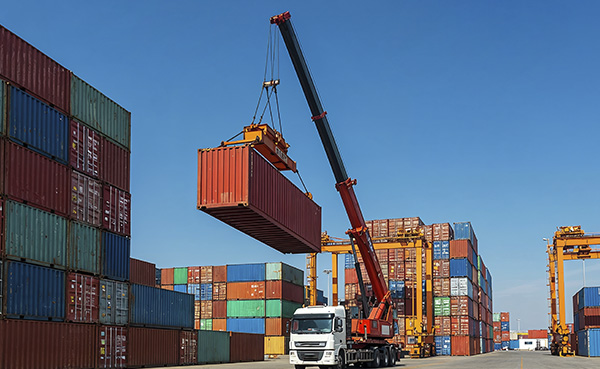
Match every export line against Annex I. Know precisely which of your steel products are in scope — and which precursors ride along.

Build a monitoring plan and start capturing direct emissions per production process. Actual data beats default values, which are set high.

Engage an accredited verifier (ISO 14065 / 17029). Consider registering your installation in the CBAM Registry to share verified data directly.

Give importers clean, verified figures and evidence of any Indian carbon price paid. It is the difference between a smooth declaration and a costly default.
EEPC India facilitates access to experienced advisory service providers who can support exporters in understanding and preparing for the European Union's Carbon Border Adjustment Mechanism (CBAM).
| Organization Name | Contact Person | Designation | E-Mail Address | Quick Links |
|---|---|---|---|---|
| CleanCarbon.ai - Thinksmart Technologies Pvt Ltd |
Mr. Nilesh Bhattad
|
Director | nb@cleancarbon.ai | Visit Website |
| Sentra.World Technologies Pvt Ltd |
Mr. Harsh Choudhry
|
Co-Founder & CEO | harsh.choudhry@sentra.world | Visit Website |
| AVA INSIGHTS PARTNERS LLP |
MS SUPRIYA BANSAL
|
PARTNER | SUPRIYA.BANSAL@AVALLP.IN | Visit Website |
| CarbonMinus (Inizent Internet Solutions Pvt Ltd) |
Mr. Nilesh Shedge
|
Chief Technical Officer (CTO) | nilesh@carbonminus.com | Visit Website |